

Welding Virtual Reality Training
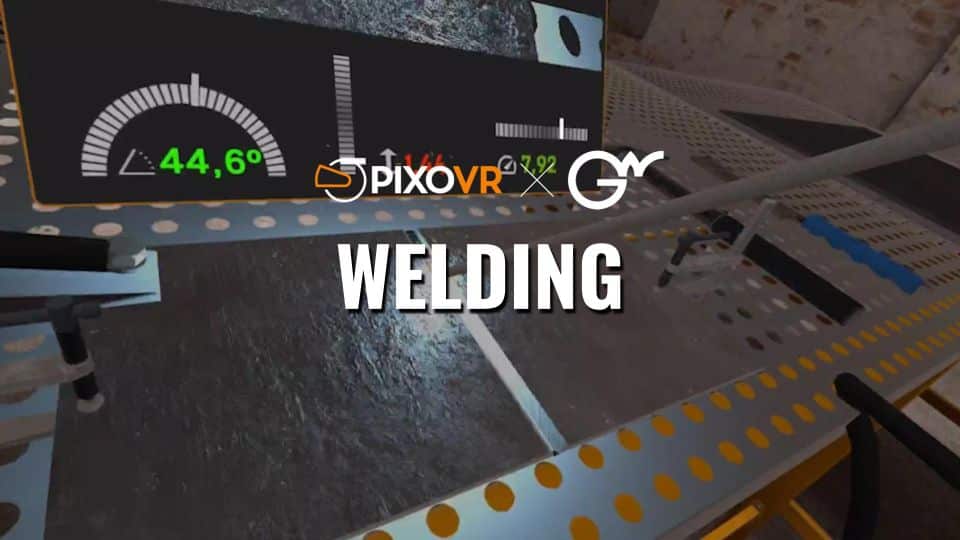
Step into a realistic virtual welding lab and build hands-on skills in a safe, controlled environment.
This immersive training focuses on SMAW (stick welding), combining real-world procedures with responsive simulation. Learners develop essential skills such as equipment setup, arc control, and weld execution, while receiving real-time feedback on technique, angle, and speed. The system also trains weld inspection and defect recognition, reinforcing quality standards used in the field.
Developer:
Users:
Headset Availability:
What You'll Learn
In the VR module you will:
You will learn to:
- Apply proper welding safety practices, including hazard recognition and correct use of PPE
- Prepare a safe welding workspace by identifying and correcting common shop hazards
- Set up a basic SMAW welding station, including connecting the ground clamp and electrode holder
- Adjust welding machine settings (amperage) based on material and electrode type
- Strike and maintain a stable welding arc
- Control arc length to ensure consistent weld quality
- Maintain correct electrode angle during welding
- Regulate travel speed to control the weld puddle and bead formation
- Produce a straight, consistent weld bead on flat plate
- Perform post-weld cleanup, including slag removal and surface preparation
- Identify common weld defects such as porosity, undercut, and slag inclusion
- Evaluate weld quality using basic visual inspection criteria
The VR Experience
Begin your training in realistic industrial environments such as bridge construction sites, shipyards, and manufacturing plants, where you identify common welding hazards and properly equip PPE before entering the work area. You’ll then move into SMAW equipment setup, learning to identify key components, assemble the welding circuit, insert electrodes, and adjust machine settings with real-time validation guiding each step.
Once setup is complete, you’ll practice striking and maintaining a stable welding arc while building control over arc length, electrode angle, and movement. From there, you’ll perform weld beads and fillet welds on common joint configurations like T-joints and lap joints, learning proper puddle control, travel speed, and weld positioning. The training concludes with a certification-style challenge where you weld independently and inspect for defects such as porosity, slag inclusion, and undercut.